
Shoulder Replacement

Shoulder replacement is a surgical procedure used to treat advanced arthritis, severe joint damage, or complex fractures. The damaged joint surfaces are replaced with artificial components designed to restore smooth movement, relieve pain, and improve function. There are two main types of shoulder replacement, and the choice depends on the condition of the rotator cuff.

Anatomic Shoulder Replacement

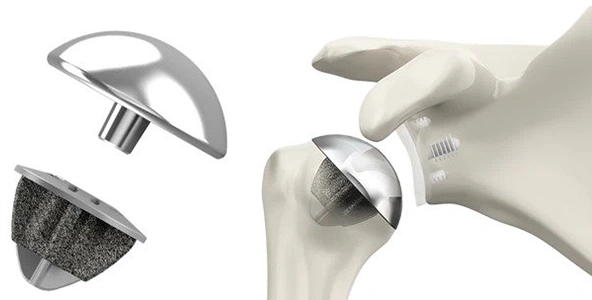
Anatomic shoulder replacement recreates the natural structure of the shoulder by replacing the ball with a metal implant and the socket with a plastic component. This option is typically used in patients with intact rotator cuff tendons and arthritis. It helps restore more normal shoulder mechanics and can provide excellent pain relief and range of motion.

Reverse Shoulder Replacement

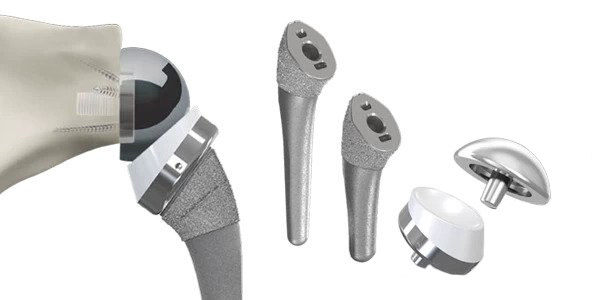
Reverse shoulder replacement switches the positions of the ball and socket, allowing the deltoid muscle to compensate for a damaged or torn rotator cuff. This design is particularly useful in patients with rotator cuff tears, cuff tear arthropathy, or certain complex fractures.

Anatomic Shoulder Replacement

Anatomic shoulder replacement recreates the natural structure of the shoulder by replacing the ball with a metal implant and the socket with a plastic component. This option is typically used in patients with intact rotator cuff tendons and arthritis. It helps restore more normal shoulder mechanics and can provide excellent pain relief and range of motion.

Reverse Shoulder Replacement

Reverse shoulder replacement switches the positions of the ball and socket, allowing the deltoid muscle to compensate for a damaged or torn rotator cuff. This design is particularly useful in patients with rotator cuff tears, cuff tear arthropathy, or certain complex fractures.